
Introduction
Every marketing team has the same argument at least once a quarter: should we go inbound or outbound?
With 90,500+ monthly searches on this topic alone, it’s clear marketers, founders, and sales teams are still wrestling with the answer. And for good reason — the line between the two has never been blurrier, especially in the age of social media.
In this guide, you’ll get a clear, practical breakdown of:
- What inbound and outbound leads actually mean
- Whether social media is inbound or outbound (spoiler: it’s both)
- The best way to convert outbound leads into inbound ones
- Real examples of each approach
- How to choose between free (organic) and paid strategies
Let’s get into it.
What Are Inbound Leads?
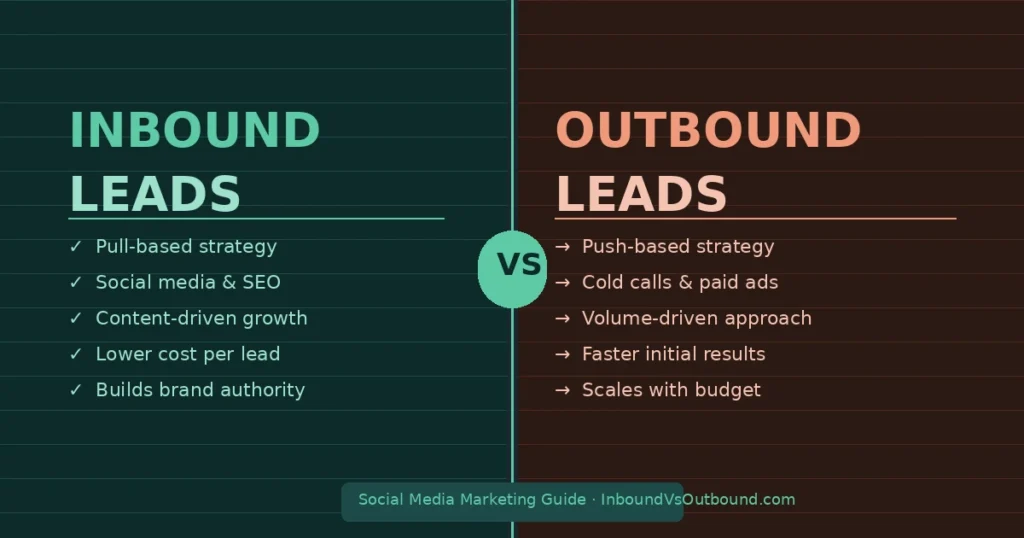
Inbound leads are prospects who come to you — they found your content, your website, or your social profile, and raised their hand.
They didn’t receive a cold call. They weren’t interrupted by an ad. They searched for a solution, found your brand, and engaged on their own terms.
Inbound Leads Example
A small business owner Googles “best CRM for service businesses” and lands on your blog post. They read it, subscribe to your newsletter, and three days later fill out your contact form. That’s an inbound lead.
Why Inbound Works
| What Drives It | Why It Matters |
|---|---|
| SEO & content marketing | Attracts high-intent buyers already searching |
| Social media (organic) | Builds brand authority over time |
| Referrals & word-of-mouth | Lowest cost, highest trust |
| Thought leadership | Positions you as the go-to expert |
Inbound leads typically convert at higher rates and have shorter sales cycles because they arrive pre-educated about your brand.
What Are Outbound Leads? (Outbound Leads Meaning)
Outbound leads are generated when you reach out to prospects — often before they’ve expressed any interest in your product or service.
You’re pushing the message out, interrupting the prospect’s day with a cold email, a paid ad, or a direct message.
Outbound Leads: Meaning in Practice
Cold calling a list of 500 prospects. Running Facebook ads to a lookalike audience. Buying a lead list and emailing it. Sponsoring a LinkedIn post to a targeted segment. All outbound.
When Outbound Makes Sense
Outbound isn’t dead — it’s just misunderstood. Here’s when it earns its budget:
- You need the pipeline fast. Outbound can generate leads in days, not months.
- You’re entering a new market. No one knows you yet — you have to make the first move.
- You have a highly specific ICP. ABM (Account-Based Marketing) is intentionally outbound.
- Your deal size justifies the cost. Enterprise sales almost always have an outbound component.
Is Social Media Inbound or Outbound Marketing?
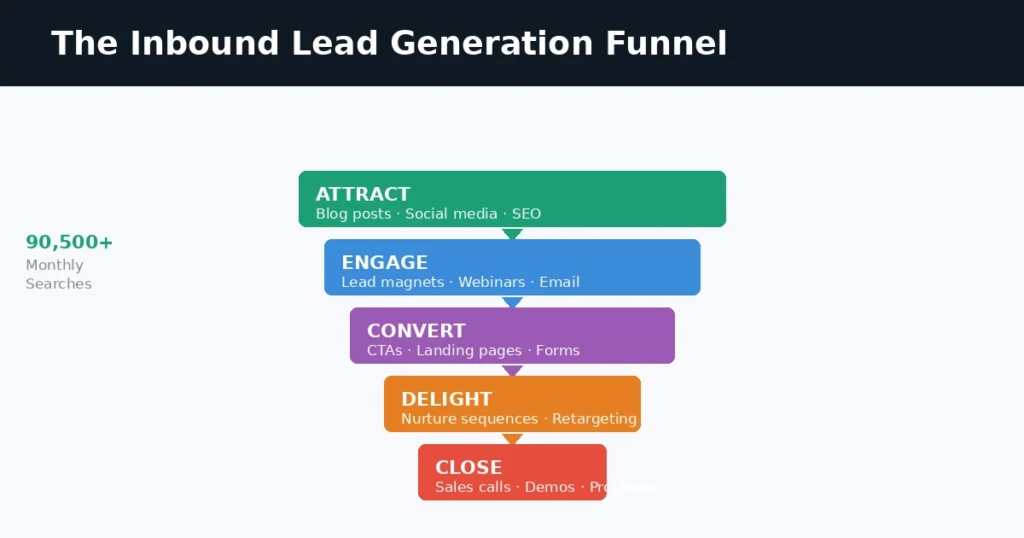
This is one of the most searched questions in this space — and the answer is: both, but primarily inbound.
Social Media as an Inbound Channel
When you post consistently, use hashtags, optimize your bio for SEO, create educational content, and build a community — that’s inbound. You’re creating a magnetic presence that pulls people toward you organically.
Inbound social media tactics include:
- Organic posts (LinkedIn articles, Instagram Reels, X/Twitter threads)
- Hashtag and keyword-optimized captions
- Community engagement (comments, DMs, replies)
- User-generated content (UGC) and testimonials
- Thought leadership and storytelling content
Social Media as an Outbound Channel
When you pay to put your message in front of strangers — through Meta Ads, LinkedIn Sponsored Content, or Instagram promotions — you’re running outbound on a social platform.
Outbound social media tactics include:
- Paid social ads (Facebook, Instagram, LinkedIn, TikTok)
- Sponsored posts and boosted content
- Cold DMs and outreach campaigns
- Influencer partnerships (paid)
- Retargeting campaigns
The Bottom Line
Think of it this way: the platform is social media, but the strategy is what makes it inbound or outbound. Most brands need both — organic for brand equity and trust, paid for scale and speed.
Free or Paid? Choosing the Right Lead Generation Model
One of the top-searched related questions on this topic — and one of the least answered clearly. Here’s the real answer:
Free (Organic / Inbound) Lead Generation
Best for: Building a sustainable, long-term pipeline
Timeframe: 3–12 months to see significant ROI
Examples: Blog SEO, YouTube, LinkedIn organic, podcast
Pros:
- Compounding returns (a blog post written today drives leads for years)
- Builds genuine brand authority
- No budget required beyond time and talent
Cons:
- Slow to start
- Requires consistent content production
- Algorithm-dependent on social platforms
Paid (Outbound) Lead Generation
Best for: Immediate pipeline, testing new markets, scaling proven offers
Timeframe: Days to weeks
Examples: Google Ads, Meta Ads, LinkedIn Ads, cold email
Pros:
- Predictable and scalable
- Highly targeted
- Fast feedback loop for testing
Cons:
- Stops the moment you stop paying
- Rising CPCs across most platforms
- Requires a budget and ongoing optimization
The Smart Play: Both
The brands winning in 2025 aren’t choosing one or the other — they’re running content-led inbound to build authority and paid outbound to amplify what’s already working. Your best-performing organic post becomes your best-performing ad creative.
The Inbound Lead Generation Funnel
Understanding how inbound leads move through your funnel is the key to converting traffic into revenue.
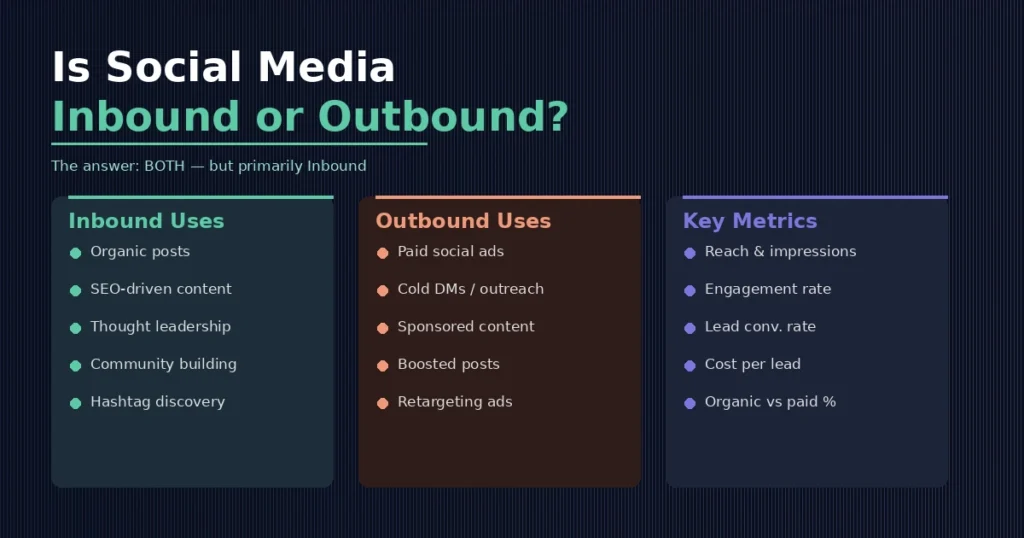
Stage 1 — Attract
Draw the right people to your brand with content they’re actively searching for.
Tactics: SEO blog posts, social media content, YouTube videos, podcasts, thought leadership on LinkedIn.
Key metric: Organic traffic, social reach, impressions.
Stage 2 — Engage
Once they find you, give them a reason to stay and interact.
Tactics: Lead magnets (free guides, templates, checklists), webinars, email newsletters, and interactive tools.
Key metrics: Email sign-up rate, time on site, and return visits.
Stage 3 — Convert
Turn engaged visitors into identified leads.
Tactics: CTAs, landing pages, forms, free trials, demo requests.
Key metric: Conversion rate, cost per lead (CPL).
Stage 4 — Nurture
Not every lead is ready to buy. Keep them warm.
Tactics: Automated email sequences, retargeting ads, personalized content recommendations.
Key metric: Lead score progression, email open/click rate.
Stage 5 — Close
Hand warm leads to sales with full context, or close via self-serve.
Tactics: Discovery calls, demos, proposals, case studies, social proof.
Key metrics: Close rate, sales cycle length, average deal value.
The Best Way to Move Outbound Leads to Inbound
This is the strategic goldmine most marketers miss. If you’re spending on outbound, you should be building a system that converts those cold prospects into warm inbound ones over time.
Here’s how:
1. Retarget Cold Prospects with Content
Don’t just run conversion ads at cold audiences. Retarget with value — serve them a helpful video, a case study, or a blog post. This warm-up sequence turns outbound cold traffic into inbound-intent leads.
2. Use Cold Outreach to Drive Organic Assets
Instead of pitching in your first cold email, link to your best-performing piece of content. “I thought this might be useful for you” converts better than “Can I have 15 minutes?” — and moves the prospect into your inbound ecosystem.
3. Build a Remarketing List from Outbound Clicks
Every person who clicks a paid ad becomes a retargeting audience. Nurture them with free value (guides, webinars, articles) until they raise their hand. This hybrid model gets the speed of outbound with the efficiency of inbound.
4. Turn Paid Ad Learnings into Organic Content
Your highest-converting ad headlines are your best content ideas. If “5 Ways to Turn Cold Leads Warm” crushes in paid, write the full organic article. Your audience told you what they want; give it to them for free and let SEO take over.
Inbound vs. Outbound: Side-by-Side Comparison
| Factor | Inbound | Outbound |
|---|---|---|
| Lead quality | Higher intent | Variable |
| Cost per lead | Lower (long-term) | Higher (ongoing) |
| Time to results | Months | Days to weeks |
| Scalability | Compounds over time | Scales with budget |
| Trust level | High (they found you) | Low (you interrupted them) |
| Best channel | SEO, social, content | Paid ads, cold email, events |
| Measurement | Traffic, conversions | CPL, CPA, ROAS |
| Lifespan | Long-term asset | Active only while funded |
Key Takeaways
- Inbound leads come to you via content, search, and social — they’re high-quality and compound over time.
- Outbound leads are generated by proactive outreach — faster but more expensive per lead.
- Social media is primarily inbound (organic), but becomes outbound when you pay to distribute.
- Free vs. paid isn’t a binary choice — the best brands use both in a flywheel model.
- The smartest move is using outbound to accelerate what inbound builds — then converting cold outbound traffic into a warm inbound pipeline.
Frequently Asked Questions
What’s the difference between inbound and outbound leads? Inbound leads contact you after finding your content or brand organically. Outbound leads are generated when you proactively reach out to prospects who haven’t expressed prior interest.
Is social media inbound or outbound marketing? Social media is primarily inbound when used organically (posts, content, community). It becomes outbound when you run paid ads or do cold outreach through the platform.
What is the best way to move outbound leads to inbound? Retarget cold prospects with valuable content, use cold outreach to drive traffic to organic assets, and build nurture sequences that warm up paid traffic over time.
What do inbound and outbound mean in sales? In sales, inbound means the prospect initiated contact. Outbound means a sales rep initiated contact through calls, emails, or LinkedIn outreach.
Is free or paid marketing better for lead generation? Both serve different purposes. Free (organic) marketing builds a compounding long-term pipeline. Paid marketing delivers fast, scalable results but stops when the budget does. Most successful brands run both.
Published by [Quickmoveleads] | Last updated: May 2025
Categories: Digital Marketing, Lead Generation, Social Media Strategy
Tags: inbound marketing, outbound marketing, social media leads, lead generation, inbound vs outbound